Academic Field Visit to Nainital
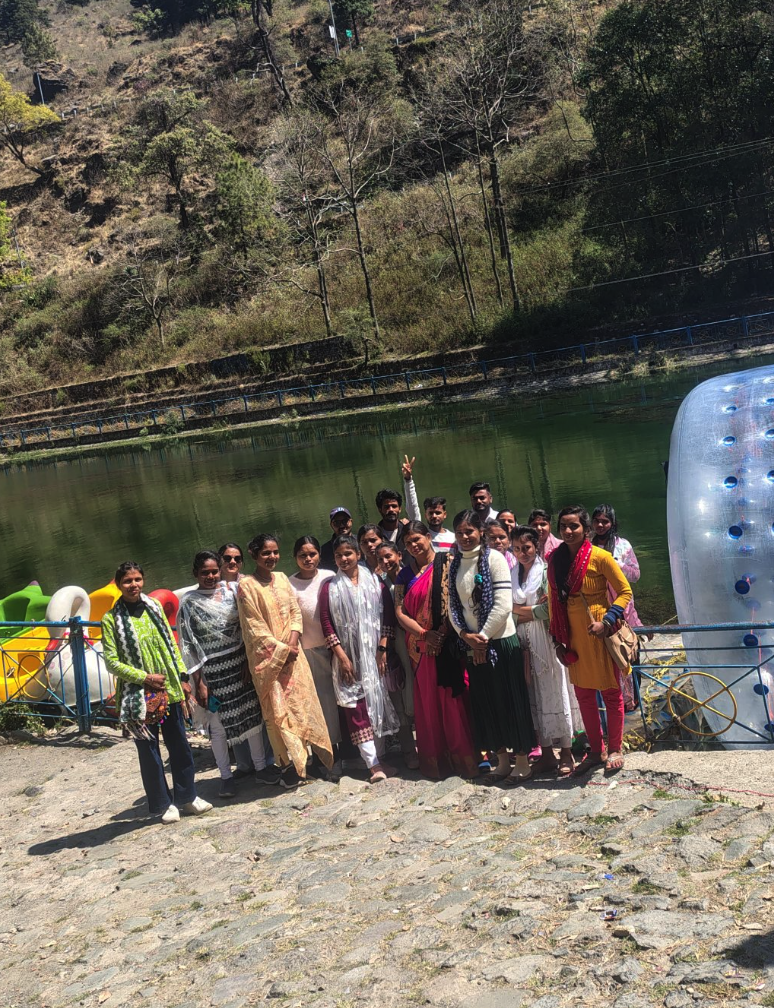
Organised by: Department of Geography
Purpose: Academic Exposure & Field Learning
1. Objective of the Educational Tour
The educational tour was conducted to provide hands-on learning experiences in physical geography, environmental diversity, climatic variations, human settlement patterns, and tourism geography. The activity aimed to enhance observation skills, field research methodology, and real-time data collection among students.
2. Major Highlights of the Visit
- Naini Lake – Study of freshwater lake ecosystem, tourism load & sustainability
- Snow View Point & Himalayan Ranges – Observation of mountain terrains, slope patterns, and climatic variability
- Eco Cave Gardens – Exploration of rock formations & flora diversity
- Naina Peak & High Altitude Vegetation – Field study of biodiversity and human-environment interaction
Students also conducted:
- Field photography documentation
- Interaction with local vendors & tourism stakeholders
- Survey on tourism impact and livelihood dependency
- Soil and vegetation observation notes
3. Role of Institutional Clubs
| Club | Contribution | Faculty Mentor |
|---|---|---|
| Environment & Sustainability Club | Survey on ecological impact, conservation awareness | Saurav Verma |
| Research & Educational Development Club | Assisted in field data recording & report writing | Dr. Rishikesh Tiwari |
| Leadership & Confidence Club | Student coordination, discipline & group management | Ravindra Sharma |
| Festival & Heritage Club | Study of cultural tourism & heritage sites | Ankit Rai |
4. Learning Outcomes
- Strengthened understanding of physical geography, eco-tourism, and sustainable development
- Improved field survey techniques, data collection, and analytical observations
- Enhanced awareness towards environmental protection and responsible tourism
- Improved communication, leadership, and team coordination among students
5. Conclusion
The educational tour significantly enriched geographical learning by exposing students to real-life landscapes, ecosystems, and human interactions. It promoted knowledge beyond classrooms and ignited interest in research-based field studies.